
Scorpions in Spain — Species, Sting First Aid (2026)
Are scorpions in Spain dangerous? 5 native species including Buthus occitanus, where they live, sting first aid, and how to keep them out of your home.
Quick Answer
The European yellow-tailed scorpion (Euscorpius flavicaudis) is Spain's most common scorpion. Their sting is comparable to a bee sting — painful but not dangerous for healthy adults.
Key Takeaways
- Spain's most common scorpion (Euscorpius flavicaudis) delivers a sting comparable to a bee sting — painful but not dangerous for healthy adults
- Scorpions are nocturnal and hide in dark, cool spaces during the day — always shake out shoes, gloves, and towels left on the floor
- Seal gaps under doors, around pipes, and in exterior walls to prevent scorpions entering your home, especially in rural southern and eastern Spain
- If stung, clean the area with antiseptic and apply ice; seek medical attention only if experiencing allergic reactions or if the person stung is a young child
Peak activity months
Spain has two common scorpion species: the Mediterranean scorpion (Buthus occitanus), which is the larger and more painful, and the European black scorpion (Euscorpius flavicaudis), which is smaller and essentially harmless. Neither species is deadly to healthy adults — their stings are comparable to a severe wasp sting, with localised pain and swelling lasting several hours. Scorpions are most active from May to October and are found primarily in rural and semi-rural areas of southern and eastern Spain, including Andalucia, Murcia, and the Comunitat Valenciana. They enter homes seeking moisture and shelter, typically hiding in shoes, under stones, and in bathrooms.
This guide covers the species you will encounter, where they hide, what to do if you or someone in your household gets stung, and the practical steps to keep them out of your property.
What Scorpion Species Are Found in Spain?
Spain is home to several scorpion species, but only two are commonly encountered by homeowners. Knowing which one you are dealing with helps you gauge the risk and respond appropriately.
Buthus occitanus — The Mediterranean Scorpion
Size: 5–8 cm | Colour: Pale yellow to sandy brown | Sting severity: Moderate to painful
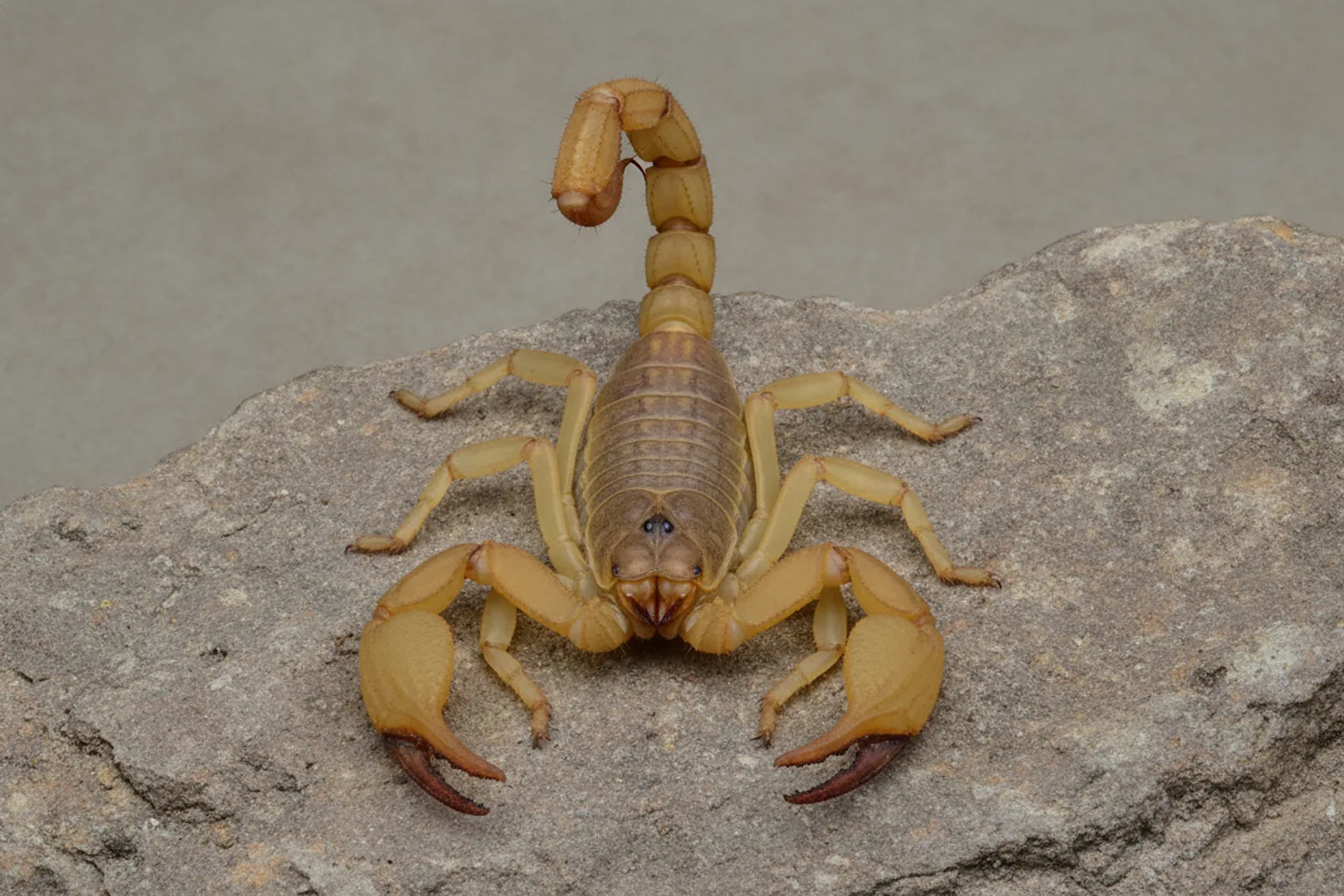
This is the one most expats encounter. The Mediterranean scorpion (also called the yellow scorpion or escorpion amarillo) is the largest and most medically significant scorpion in Spain. It is widespread across the southern half of the country, particularly in Andalucia, Murcia, inland Comunitat Valenciana, Extremadura, and rural parts of Catalonia and Aragon.
Its sting is often compared to a severe wasp sting — sharp, burning pain that can last several hours. Local swelling and redness are normal. In rare cases, particularly with children under 10, elderly adults, or people with compromised immune systems, more systemic reactions can occur: nausea, elevated heart rate, sweating, and localised numbness. Anaphylaxis is exceptionally rare but not impossible if you have a venom allergy.
Key identification features: Pale yellow or straw-coloured body, relatively thick tail segments, small pincers relative to body size. The small pincers are actually a warning sign — in the scorpion world, species with smaller claws tend to compensate with more potent venom.
Euscorpius flavicaudis — The European Black Scorpion
Size: 3–4.5 cm | Colour: Dark brown to black with a yellowish tail tip | Sting severity: Mild
The European black scorpion is smaller, darker, and considerably less concerning. Its sting is mild — most people describe it as less painful than a bee sting. It is found across coastal Catalonia, the Balearic Islands, and parts of the Comunitat Valenciana.
This species is more moisture-dependent than Buthus occitanus and tends to favour gardens, stone walls, and areas near water sources rather than dry interiors. You are more likely to find one under a plant pot on your terrace than inside your bedroom.
Key identification features: Dark body, distinctly yellowish tail tip, larger pincers relative to body size. If you find a small, dark scorpion with chunky claws — it is almost certainly this species, and the sting risk is minimal.
Can Scorpion Stings Be Fatal in Spain?
There are no recorded fatalities from scorpion stings in Spain. The country’s scorpion fauna is firmly in the “painful but not dangerous” category for healthy adults. This puts Spain in a completely different league from North Africa, the Middle East, or the Americas, where genuinely lethal species exist. That said, pain is pain, and prevention is far better than first aid.
Where Do Scorpions Live and Hide in Spain?
Understanding scorpion habitat is the key to both avoiding stings and protecting your property. Scorpions are nocturnal predators that spend daylight hours hidden in cool, dark, tight spaces.
What Are Common Outdoor Scorpion Habitats?
Scorpions favour properties with stone walls, rubble, and dry-stone terracing — all extremely common across rural Spain. Old fincas, cortijos, and masias with traditional stone construction are prime scorpion territory. Other hotspots include firewood stacks (a classic hiding place — always shake logs before bringing them inside), under terracotta roof tiles and loose building materials, rock gardens and decorative stone features, compost heaps and garden debris piles, beneath outdoor furniture cushions and pool equipment, and cracks in rendered walls, particularly south-facing walls that absorb daytime heat.
How Do Scorpions Get Inside Your Home?
Scorpions enter homes for two reasons: hunting prey (insects, spiders) and seeking shelter from extreme heat or cold. Common entry routes include gaps beneath exterior doors (a 3mm gap is sufficient), wall cracks and gaps around window frames, through open windows and doors left ajar at night, inside firewood carried indoors, around pipe penetrations and cable entry points, and under terracotta roof tiles into attic spaces.
If your property borders open countryside, garrigue scrubland, or olive groves, you are at significantly higher risk than someone in a modern urbanisation. Rural properties across Andalucia, Murcia, and inland Valencia report the highest encounter rates — the same areas where processionary caterpillars and rats are also common concerns.
When Is Scorpion Season in Spain?
Scorpions in Spain are most active from May through to October, with peak activity in the hottest months of July and August. They emerge after dark, typically from 10pm onwards, to hunt. Activity drops sharply once overnight temperatures fall below 15°C.
During the cooler months (November to March), scorpions enter a state of reduced activity, sheltering in deep crevices, under rocks, or within wall cavities. They are not truly dormant — a warm winter day can bring them out — but encounters are uncommon.
In rural Andalucia, I tell every new property owner the same thing: shake your shoes in summer. It takes two seconds and it prevents the vast majority of scorpion stings I treat. Most stings happen when people put on shoes or boots that have been sitting in a garage or on a terrace overnight.
What Should You Do if Stung by a Scorpion in Spain?
If you or someone in your household is stung by a scorpion in Spain, do not panic. The protocol is straightforward.
What Are the Immediate First Aid Steps?
- Move away from the scorpion. Do not attempt to catch or kill it unless you can do so safely. Identification helps medical professionals, but it is not worth a second sting.
- Clean the wound with soap and water. Scorpion stings can introduce bacteria.
- Apply a cold compress — ice wrapped in a cloth or a bag of frozen peas. Apply for 10 minutes on, 10 minutes off. Cold reduces swelling and can partially numb the pain.
- Take an over-the-counter antihistamine (cetirizina or loratadina, both available without prescription from any Spanish farmacia). This helps manage the local inflammatory response.
- Take paracetamol or ibuprofen for pain. Avoid aspirin, which can thin the blood and worsen swelling at the sting site.
- Keep the affected limb elevated if practical.
When Should You Seek Medical Attention?
Go to your local centro de salud or urgencias (A&E) if any of the following apply: the person stung is a child under 10, elderly, or has a compromised immune system; there are signs of an allergic reaction — difficulty breathing, swelling of the face or throat, widespread hives, dizziness, or rapid heartbeat; the pain does not improve after 2–3 hours or gets significantly worse; there is spreading redness, warmth, or signs of infection around the sting site in the following days; multiple stings have occurred.
For a severe allergic reaction, call 112 (Spain’s universal emergency number) immediately. If the person carries an adrenaline auto-injector (EpiPen), administer it as per their action plan.
What Should You Avoid Doing After a Scorpion Sting?
Do not cut the sting site or attempt to suck out venom. Do not apply a tourniquet. Do not apply alcohol or strong antiseptics directly to the wound — soap and water is sufficient. These outdated remedies cause more harm than the sting itself.
How Do You Keep Scorpions Out of Your Spanish Home?
Prevention is entirely achievable. Scorpions are not like cockroaches in Spain, which exploit an entire underground drain network. Scorpions come from the immediate surroundings of your property, and the entry points are relatively easy to identify and block.
How Do You Seal Entry Points?
Door sweeps (burletes) are your first line of defence. Every exterior door should have a brush or rubber seal along the bottom edge. These cost €3–8 at Leroy Merlin, Bricomart, or any ferreteria, and they take ten minutes to install. Check them annually — the rubber degrades in Spanish sun.
Seal wall cracks and gaps with silicone sealant or expanding foam. Walk the exterior perimeter of your property and fill anything wider than 2–3mm. Pay particular attention to where rendered walls meet door and window frames, around pipe and cable penetrations through exterior walls, at the base of exterior walls where they meet the ground, and around air conditioning unit installations.
Window screens (mosquiteras) keep scorpions out just as effectively as they keep mosquitoes at bay. If you are in a rural area, screens on every opening window are a worthwhile investment. Roller-style mosquiteras are widely available across Spain and can be fitted to most Spanish window types.
How Should You Manage the Property Perimeter?
Clear debris from the base of exterior walls. Scorpions shelter in anything that offers darkness and contact with cool stone. Remove stacked pots, timber, cardboard, and garden waste from within one metre of the building.
Store firewood away from the house. The ideal is a covered wood store at least 5 metres from the building, raised off the ground on a metal rack. Always shake individual logs before carrying them inside — this single habit prevents a significant number of indoor encounters.
Reduce exterior lighting at ground level, or switch to yellow/sodium bulbs. Standard white lighting attracts the insects that scorpions prey on, which in turn attracts scorpions. Motion-sensor lighting is a good compromise.
Trim vegetation away from walls. Climbing plants, overhanging branches, and dense shrubs touching the building create scorpion highways. Maintain a clear gap between greenery and the structure.
What Indoor Precautions Should You Take During Scorpion Season?
Shake shoes and boots before putting them on — especially those stored in garages, utility rooms, or on terraces.
Check bedding before getting in, particularly if your bedroom is on the ground floor of a rural property. Scorpions occasionally shelter in folded sheets and under pillows.
Do not walk barefoot at night on tiled floors in rural properties during summer months. If you need to visit the bathroom, use a torch or switch on the light and wear slippers.
Keep the house sealed at night. Close windows and doors after dusk unless they have fitted screens. This also helps with mosquito control and keeps out other nocturnal visitors.
These same principles form part of a broader property protection strategy. If you are preparing a holiday home for the season, our holiday home pest-proofing guide covers the full checklist.
Get the Free Prevention Checklist
The exact 12-step system professional pest controllers use – adapted for DIY homeowners.
Download FreeDo You Need Professional Scorpion Control?
For properties with persistent scorpion problems — typically rural fincas and cortijos in Andalucia, Murcia, and inland Valencia — professional treatment can make a significant difference.
What Do Professional Scorpion Treatments Involve?
Perimeter spray treatment is the standard approach. A residual insecticide is applied around the base of exterior walls, along door thresholds, around window frames, and in cracks and crevices where scorpions shelter. The residual effect typically lasts 2–3 months, meaning treatments in May and July usually cover the peak season.
Insecticidal dust (often deltamethrin-based) is applied into wall cavities, behind skirting boards, beneath roof tiles, and in other void spaces where spraying is impractical. The dust remains effective for months in dry conditions.
Exclusion work — sealing gaps, fitting door sweeps, and installing screens — is often offered as part of a comprehensive service. Some companies provide a combined pest package that also covers cockroach and ant treatment for the full season.
How Much Does Professional Scorpion Treatment Cost?
Expect to pay €80–150 for a perimeter treatment of a typical villa or finca. Larger properties or those requiring significant exclusion work will cost more. Most professional pest control companies operating in rural areas of southern Spain are familiar with scorpion treatment — it is a routine part of their seasonal work. See our guide to finding pest control professionals in Spain for verified, English-speaking providers.
What DIY Chemical Options Are Available?
If professional treatment is not practical, several products available in Spain offer some protection. Insecticidal dust (polvo insecticida) containing deltamethrin or cypermethrin can be puffed into cracks, under skirting boards, and around door frames using a hand-bellows duster. Available from agricultural supply shops (cooperativas agrarias) and some ferreterias.
Residual barrier sprays containing cypermethrin or lambda-cyhalothrin, applied around exterior perimeters and entry points, can deter scorpions for several weeks. Follow label instructions precisely and keep children and pets away from treated surfaces until dry. If you have pets, review our guide to pet-safe pest control in Spain before applying any chemical treatment.
How Are Scorpions Connected to Other Spanish Pests?
Scorpions are part of a broader ecosystem of creatures that share your Spanish property. Their presence is often linked to other pest issues.
Scorpions eat insects. If you have a significant scorpion population around your property, it is likely because there is an abundant food supply — cockroaches, crickets, beetles, spiders, and ants all feature in the scorpion diet. Addressing a cockroach problem or ant infestation can indirectly reduce scorpion numbers by removing their food source.
Scorpions share entry points with other pests. The gaps under doors, wall cracks, and unsealed pipe penetrations that let scorpions in are the same routes used by cockroaches, ants, and mice. A comprehensive sealing job protects against the full range of Spanish pests. Our apartment pest prevention guide and summer preparation checklist cover the complete approach.
Climate change is extending scorpion season. Warmer autumns mean scorpions remain active later into October and even November in some years. Milder winters improve overwintering survival rates. This is part of a broader pattern of climate-driven pest changes across Spain that is affecting everything from scorpion encounters to termite range expansion.
Get the Printable Prevention Checklist
Seal every entry point, protect every drain, and prepare every room — the complete room-by-room pest prevention checklist for Spanish homes.
Download FreeFrequently Asked Questions
Frequently Asked Questions
Are scorpions in Spain dangerous?
What should I do if I find a scorpion in my house in Spain?
Which parts of Spain have the most scorpions?
When is scorpion season in Spain?
Can scorpions climb walls and get into beds?
What Should Expats Know About Scorpions in Spain?
Scorpions are one of those aspects of Spanish rural life that nobody mentions in the relocation brochure. For expats coming from the UK, Ireland, or Northern Europe — where the most alarming garden creature is a spider — the first encounter with a scorpion can be genuinely shocking.
But here is the perspective that comes with time: scorpions in Spain are a manageable nuisance, not a genuine threat. They are predictable (nocturnal, seasonal, habitat-dependent), they are preventable (sealing, clearing, screening), and they are treatable (both DIY and professional options exist). Thousands of expat families across rural Andalucia, Murcia, and Valencia live comfortably alongside them with nothing more than sensible precautions.
The shake-your-shoes habit becomes automatic. The door sweeps go on. The firewood gets stored properly. And the scorpions stay where they belong — outside, doing their job of keeping the insect population in check.
If you are new to Spain and still navigating the full range of pest surprises, our first-year expat pest guide covers everything you need to know. And if something has already stung, bitten, or invaded, the emergency guide has you covered.
Scorpions by City in Spain
Looking for scorpions advice for your specific area? Risk level, season window, and prevention vary by climate zone. See the city-specific guide for where you live:
Related Guides
- Complete Cockroach Guide for Spain — the most common pest problem for Spanish homeowners
- Mosquitoes in Spain — prevention and bite treatment
- Ants in Spain — species identification and control
- Processionary Caterpillars — the other dangerous outdoor pest
- Climate Change and Pests in Spain — why encounters are increasing
- Find a Professional — English-speaking pest control across Spain

Written by James Thornton
Founder & Lead Writer
British expat living in Málaga since 2019. Researched 200+ pest control cases across 16 Spanish regions.

Reviewed by Carlos Ruiz Martín
ROESBA-certified (Spain's Official Pest Control Registry). DDD specialist. Member of ANECPLA.