
Fleas in Spain: Pet Owner's Guide to Identification
Complete flea guide for expat pet owners in Spain. Cat fleas, dog fleas, sand fleas, treatment options, and how to eliminate them from your home.
Quick Answer
Fleas thrive year-round in Spain's warm climate. Effective treatment requires treating pets AND the home simultaneously — vacuum thoroughly, wash bedding at 60°C, and use a premise spray containing IGR.
Key Takeaways
- Fleas in Spain are active year-round due to the warm climate — seasonal Northern European treatment schedules are not sufficient here
- Effective elimination requires treating pets AND the home simultaneously; treating only one allows re-infestation within days
- Vacuum all floors and soft furnishings daily during an infestation, and wash pet bedding at 60°C or above to kill eggs and larvae
- Use a premise spray containing an insect growth regulator (IGR) to break the flea lifecycle — adult fleas are only 5% of the population
Peak activity months
The cat flea (Ctenocephalides felis) is responsible for over 95% of flea infestations in Spain and thrives year-round in the warm Mediterranean climate — unlike in Northern Europe, there is no winter break. Fleas are most active from March to November, but indoor infestations can persist through every month of the year. Effective treatment requires a simultaneous approach: treat pets with veterinary-grade products (oral or spot-on), vacuum all floors and soft furnishings daily, wash bedding at 60 degrees Celsius, and apply a premise spray containing an insect growth regulator (IGR) to break the lifecycle.
If you’ve relocated from the UK, Ireland, Germany, or the Netherlands, your approach to flea control almost certainly needs recalibrating. The seasonal “treat from spring to autumn” strategy that works in Northern Europe will leave you badly exposed here. Once fleas have established themselves in your Spanish home, getting rid of them requires a systematic, multi-phase approach that most pet owners underestimate.
This guide covers everything you need to know — from identification and treatment to prevention and product availability in Spanish farmacias and veterinary clinics. Whether you’re dealing with an active infestation or trying to prevent one, this is your comprehensive reference.
Why Are Fleas a Bigger Problem in Spain Than Northern Europe?
The single biggest factor is climate. Fleas thrive in warm, humid conditions, and Spain delivers exactly that for the vast majority of the year.
How Does Temperature Affect the Flea Lifecycle?
The cat flea — the species responsible for over 95% of pet flea infestations worldwide — completes its lifecycle fastest at temperatures between 20°C and 30°C with relative humidity above 50%. In southern Spain, outdoor temperatures sit in this range from March through November, and indoor temperatures rarely drop below 18°C even in the coldest winter months. Compare that to the UK, where outdoor conditions are only consistently favourable for flea development from May to September.
What this means in practice: flea eggs laid in your home or garden can develop into biting adults in as little as two to three weeks in Spanish conditions. In a British house during winter, that same lifecycle can stretch to six months or more — or stall entirely. Spain’s warmth compresses the flea lifecycle and accelerates population growth dramatically.
Why Does Year-Round Outdoor Living Increase Flea Risk?
Expats in Spain spend far more time outdoors than they did in Northern Europe — and so do their pets. Dogs roam gardens, terraces, and patios daily. Cats come and go through open doors. This constant indoor-outdoor movement gives fleas endless opportunities to hitch a ride inside. In the UK, a dog that spends winter evenings curled up by the radiator and only ventures out for brief walks has far less flea exposure than a dog in Andalucia that naps under a fig tree every afternoon.
Do Wildlife and Stray Animals Spread Fleas?
Spain’s wildlife population contributes significantly. Hedgehogs, feral cats, foxes, rabbits, and rats all carry fleas and deposit flea eggs in gardens, communal green spaces, and rural fincas. If you live on an urbanizacion with communal gardens, or in the campo where wildlife wanders freely through your property, the flea pressure on your pet is constant and year-round. Even mosquitoes are easier to manage by comparison — at least they don’t breed inside your sofa.
Do Tile Floors Protect Against Fleas?
Spanish homes typically have tile or marble floors rather than carpet, which many expats assume means fleas aren’t a problem. While it’s true that flea larvae struggle on smooth, exposed tile, they thrive in the cracks between tiles, under skirting boards, in rugs, pet beds, sofa cushions, and any textile that sits on or near the floor. Don’t let your tile floors lull you into a false sense of security.
In Spain, I see flea cases twelve months a year. British and Irish pet owners are used to treating seasonally — April to October. That doesn't work here. Even in January along the Costa del Sol, temperatures are warm enough for flea eggs to hatch within days. Year-round prevention is non-negotiable.
What Flea Species Will You Encounter in Spain?
Not all fleas are the same, though the distinction matters less than you might think. Here are the species relevant to pet owners and residents in Spain.
Cat Flea (Ctenocephalides felis) — The Dominant Species
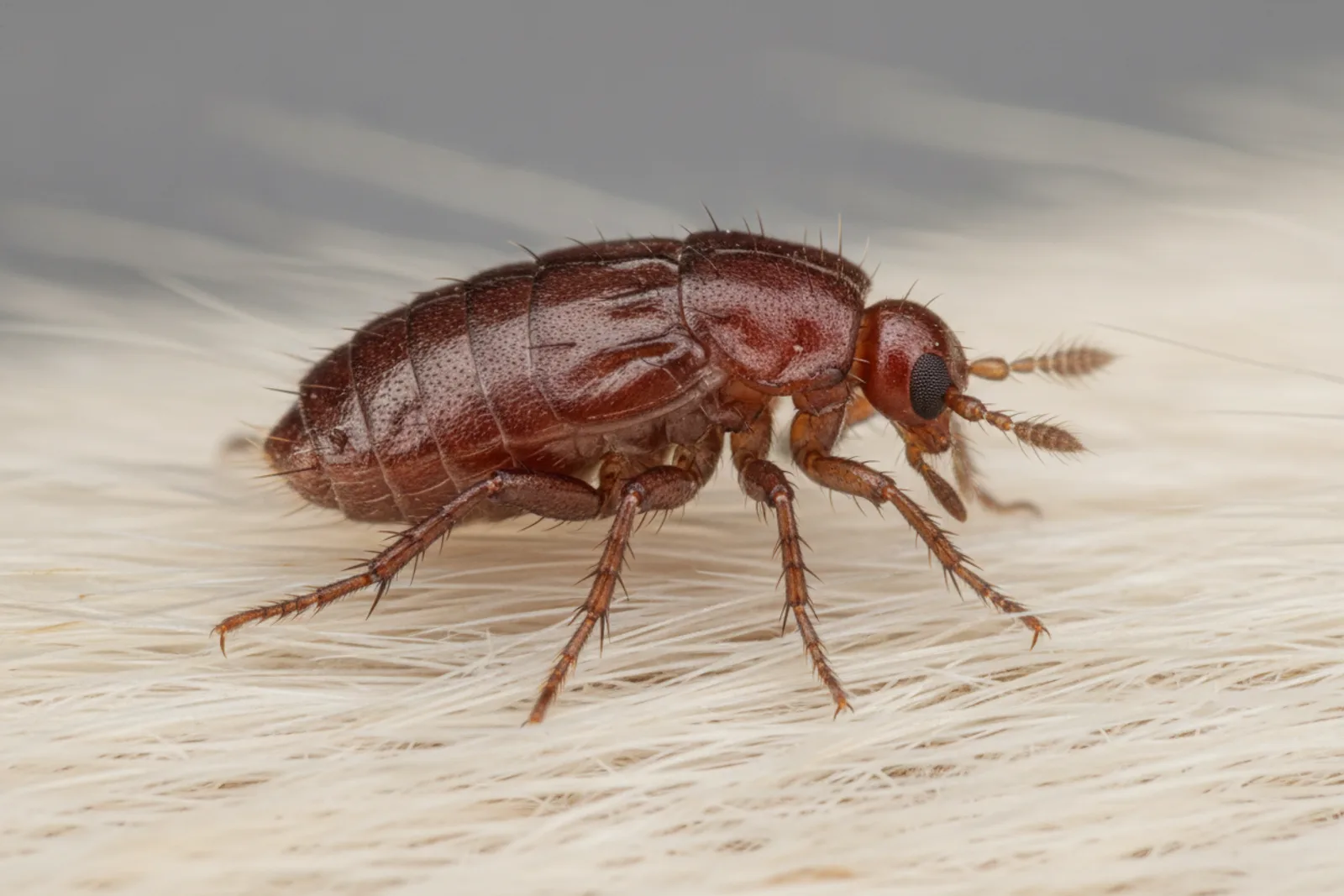
Despite its name, the cat flea infests both cats and dogs and is responsible for the overwhelming majority of flea problems in Spanish homes. It’s the species living on your Labrador, your tabby, and in your sofa cushions. Adults are 1-3mm long, dark brown, laterally flattened (thin from side to side), and capable of jumping up to 30cm vertically — roughly 150 times their own body length.
The cat flea is a prolific breeder. A single female can lay 40-50 eggs per day, and those eggs don’t stick to the pet — they roll off into carpets, pet beds, cracks in tiles, and soft furnishings. Within a week of a single flea arriving on your pet, your home can contain hundreds of eggs in various stages of development.
Dog Flea (Ctenocephalides canis)
Morphologically similar to the cat flea and often found on dogs, though less common overall. In practice, most “dog flea” infestations in Spain are actually cat fleas on dogs. The treatment approach is identical for both species.
Human Flea (Pulex irritans)
Historically common but now rare in well-maintained Spanish homes. Human fleas can still be encountered in very old rural properties, abandoned buildings, and occasionally in homes with significant rodent problems. If you’re being bitten but have no pets, consider that you may have a rodent issue carrying fleas — or a residual infestation from a previous tenant’s pets.
Are There Sand Fleas on Spanish Beaches?
A common source of confusion — addressed in detail in a dedicated section below.
How Do Flea Infestations Start?
Understanding the entry points helps you prevent and respond to infestations more effectively.
How Do Fleas Spread From Pets to Your Home?
This is the primary route. Your dog picks up adult fleas during a walk, in the garden, or from contact with another animal. Those fleas feed, mate, and begin laying eggs within 24-48 hours. The eggs fall off your pet wherever it goes — the sofa, the bedroom, the car, the kitchen floor. Larvae hatch from those eggs in 2-14 days (depending on temperature), feed on organic debris and adult flea faeces in the environment, spin a cocoon, and eventually emerge as new adults ready to jump onto the nearest warm-blooded host.
The critical detail: only about 5% of a flea infestation consists of adult fleas on your pet. The other 95% — eggs, larvae, and pupae — are in your home. This is why treating only the pet never works.
Can Feral Cats and Wildlife Bring Fleas to Your Garden?
Feral cat colonies are extremely common across Spain, and they frequently visit gardens and outdoor spaces. A feral cat sleeping under your porch deposits thousands of flea eggs into that environment. Your dog then picks up emerging adults during its morning garden visit. Rural fincas with hedgehog, rabbit, or fox activity face the same problem.
Why Do Fleas Appear When You Return to an Empty Holiday Home?
This catches many expats off guard. Flea pupae inside their cocoons can remain dormant for up to twelve months, waiting for vibrations, warmth, and CO2 that signal a host is nearby. If you leave your Spanish property empty for weeks or months and return, dormant pupae can emerge en masse within hours of your arrival. The sudden vibrations of walking across floors and the CO2 from your breathing trigger a synchronised hatching event. This is why people sometimes report being “attacked by fleas” the moment they open the door to a property that’s been sitting empty.
Can Second-Hand Furniture Carry Fleas?
Buying sofas, rugs, pet beds, or soft furnishings from Wallapop, Milanuncios, or local rastros carries genuine risk — not just for bed bugs but for fleas too. Flea pupae in cocoons are extraordinarily resilient and can survive inside furniture for months.
What Are the Signs of a Flea Infestation?
Catching an infestation early makes treatment far simpler. Here’s what to look for.
Why Is Your Pet Scratching Excessively?
The most obvious sign. Flea saliva contains compounds that trigger an allergic reaction in many animals (flea allergy dermatitis, or FAD). If your pet is scratching, biting, or chewing at its skin — particularly around the base of the tail, the belly, and the inner thighs — fleas should be your first suspicion.
How Do You Do the Flea Dirt Test?
Part the fur on your pet’s lower back or belly and look for tiny black specks on the skin. Collect some on a damp piece of white kitchen paper. If the specks dissolve into reddish-brown smears, that’s flea faeces (digested blood). This is the most reliable at-home diagnostic test and works even when you can’t find live fleas.
Why Are You Getting Bites Around Your Ankles?
Fleas in the home environment tend to bite humans around the ankles and lower legs — they jump from floor level and bite the first skin they reach. If you’re waking up with clusters of small, intensely itchy red bites around your ankles, fleas are almost certainly the cause. These bites are often confused with mosquito bites, but flea bites tend to be smaller, grouped more tightly, and concentrated on the lower extremities.
What Do Fleas Look Like?
Adult fleas are visible to the naked eye — small, dark, fast-moving insects that jump when disturbed. You’ll most often spot them on light-coloured pet bedding, on tile floors near where pets sleep, or jumping onto your socks and lower legs. A flea comb run through your pet’s fur, particularly around the neck, tail base, and belly, will often catch live adults.
What Do Fleas Look Like — and How Do Their Bites Differ?
Adult fleas are just 1-3mm long, dark brown, and laterally flattened (thin from side to side), which lets them slip easily through fur. They are visible to the naked eye — small, dark, fast-moving insects that jump when disturbed — and the cat flea can leap up to 30cm vertically, roughly 150 times its own body length. You’ll most often spot them on light-coloured pet bedding, on tile floors near where pets sleep, or jumping onto your socks and lower legs.
To confirm fleas, run a flea comb through your pet’s fur around the neck, tail base, and belly to catch live adults, and use the flea dirt test: collect specks from the skin on damp white paper — if they dissolve into reddish-brown smears, that’s flea faeces (digested blood).
Flea bites on humans look different from the bed bug pattern. Because fleas jump from floor level, they bite the first skin they reach — so bites cluster tightly around the ankles and lower legs rather than the upper body. They appear as small, intensely itchy red bites, often confused with mosquito bites, but flea bites tend to be smaller and grouped more tightly together.
How Do You Get Rid of Fleas in Spain?
Effective flea elimination requires treating three areas simultaneously. Miss one, and the infestation cycles back. This is where most pet owners fail — they treat the pet but ignore the home, or they clean the house but neglect the garden.
How Do You Treat Your Pet for Fleas?
Start here. Your pet is the primary food source, and without treating it, everything else is wasted effort.
Prescription options (require a Spanish vet visit):
- Bravecto (fluralaner): Oral chew for dogs (lasts 12 weeks) or topical spot-on for cats (lasts 12 weeks). Kills fleas within 2-8 hours. One of the most effective products available. Expect to pay €30-50 per dose depending on pet weight.
- NexGard (afoxolaner): Monthly oral chew for dogs. Kills fleas within 8 hours. Around €15-25 per month.
- Simparica (sarolaner): Monthly oral chew for dogs. Similar efficacy to NexGard. €15-25 per month.
- Broadline: Topical spot-on for cats combining flea, tick, and worm treatment. Available through vets.
Over-the-counter options (available at farmacias and veterinary clinics):
- Frontline Combo (fipronil + S-methoprene): Spot-on available without prescription at most farmacias and veterinary clinics in Spain. €15-25 for a multi-pack. Still effective for many flea populations, though some resistance has been reported.
- Advantage (imidacloprid): Spot-on for cats and dogs. Available over the counter. Works within 12 hours.
- Seresto collar (imidacloprid + flumethrin): Provides 7-8 months of continuous flea and tick protection. Available at veterinary clinics and some farmacias. €30-45. An excellent option for owners who forget monthly treatments.
Important: Spanish vets are generally well-stocked and can prescribe the same modern treatments available elsewhere in Europe. Your first step after discovering fleas should be a vet visit — a consulta typically costs €30-50 and the vet can prescribe the most appropriate treatment for your pet’s species, weight, and health status.
How Do You Treat Your Home for Fleas?
This is where the bulk of the infestation lives. Remember — 95% of the flea population is in your environment, not on your pet.
Washing: Every textile your pet has contacted — beds, blankets, throws, cushion covers, your own bedding if the pet sleeps with you — needs washing at 60°C or above. This kills all life stages including eggs. Lower temperatures are not reliable. If an item can’t be washed at 60°C, tumble-dry on high heat for at least 30 minutes.
Vacuuming: Vacuum every floor surface, paying special attention to skirting boards, tile grooves, under furniture, and any area where your pet rests. Vacuum sofas, chairs, and cushions thoroughly. The vibration from vacuuming also stimulates dormant pupae to emerge, bringing them into contact with any treatments you’ve applied. Vacuum daily for at least two weeks during an active infestation. Empty the vacuum bag or canister into an outdoor bin immediately after each session.
Insect Growth Regulator (IGR) sprays: These are the real game-changer for home treatment. IGR sprays prevent flea eggs and larvae from developing into adults, breaking the lifecycle at its source. Key products available in Spain include:
- Indorex Defence Spray: Available from veterinary clinics and online (Amazon.es). One can treats approximately 79m². Provides up to 12 months of protection. €15-25 per can.
- Flee spray: Available at some veterinary clinics. Contains a combination of IGR and adulticide.
- Household flea sprays from Bayer/Advantage: Look for sprays containing methoprene or pyriproxyfen as the IGR active ingredient.
Spray all floor surfaces, skirting boards, under furniture, pet sleeping areas, and soft furnishings. Keep pets and children off treated surfaces until dry (typically 1-2 hours). You may need to repeat the treatment after 2-4 weeks if the infestation is severe.
How Do You Treat Your Garden and Outdoor Areas?
If your pet has garden access, the garden is almost certainly part of the problem.
Garden and terrace treatment:
- Keep grass cut short — flea larvae need shade and humidity to survive, and direct sunlight kills them
- Clear leaf litter, garden debris, and organic matter from areas where pets rest
- Treat shaded, humid areas (under bushes, garden beds, covered terraces) with outdoor flea sprays or diatomaceous earth
- Pay particular attention to areas where feral cats, hedgehogs, or other wildlife may rest — under sheds, in woodpiles, along fence lines
For severe outdoor infestations, a professional pest control treatment of the garden perimeter and pet areas is worth the investment. This is especially relevant for finca owners and properties bordering rural or natural land.
Where Can You Buy Flea Products in Spain?
Navigating the Spanish market for flea products can be confusing for expats. Here’s a practical breakdown of where to find what.
What Flea Treatments Do Spanish Farmacias Stock?
Spanish farmacias stock a reasonable range of pet flea treatments, particularly spot-ons like Frontline and Advantage. Availability varies by location — large farmacias in cities and tourist areas tend to stock more pet products. You don’t need a prescription for spot-on treatments, but you do need a vet prescription for oral treatments like Bravecto and NexGard.
What Can You Get From Spanish Veterinary Clinics?
Your best source for the full range of treatments. Spanish vet clinics stock prescription and non-prescription products and can advise on the most appropriate option. They typically carry Seresto collars, Frontline, Advantage, Bravecto, NexGard, Simparica, and home treatment sprays like Indorex. Prices are competitive and often comparable to UK prices.
Can You Buy Flea Treatments Online in Spain?
Amazon.es stocks household flea sprays (Indorex, Flee), Seresto collars, Frontline spot-ons, and various environmental treatment products. Delivery times are generally 1-3 days across mainland Spain. Prescription treatments cannot be purchased online without a valid Spanish prescription. Online pet pharmacies that ship from within the EU (such as Tiendanimal.es or Zooplus.es) also carry a wide range. For broader pest control products — including sprays and traps for cockroaches and other household pests — you’ll find the most comprehensive selection on Amazon.es and specialist sites like the ones covered in our best products guide.
What Flea Products Are Hard to Find in Spain?
Some UK-specific brands (like Bob Martin or Johnson’s) are less commonly available in Spain. The active ingredients are the same across European products, so finding equivalents is straightforward — but if you have a strong brand preference, check availability before you run out.
How Do You Prevent Fleas in Spain?
Preventing fleas in Spain requires a different mindset than in Northern Europe. The key difference is simple: there is no off-season.
Why Is Year-Round Flea Treatment Essential in Spain?
In the UK, many pet owners treat for fleas from April to October and stop over winter. In Spain — particularly in Andalucia, the Levante coast, the Balearics, and the Canary Islands — you must treat your pet every single month of the year. Flea activity dips slightly in the coolest winter weeks in central and northern Spain (Castilla y Leon, Aragon, parts of Catalonia), but along the coast and in the south, temperatures remain flea-friendly year-round.
Set a monthly reminder. Use a long-lasting product like Bravecto (12 weeks) or a Seresto collar (7-8 months) if you struggle to maintain a monthly schedule.
How Does Regular Vacuuming Help With Fleas?
Even without an active infestation, vacuuming pet resting areas, rugs, and soft furnishings weekly removes flea eggs before they develop. This single habit dramatically reduces your risk of an infestation taking hold.
How Often Should You Wash Pet Bedding?
Wash pet beds, blankets, and throws at 60°C at least fortnightly. More frequently if your pet spends time outdoors in areas with wildlife activity.
What Garden Maintenance Reduces Fleas?
Keep grass short, clear debris, and eliminate the shaded, humid microhabitats that flea larvae need to survive. If you have a swimming pool area, be aware that the damp, shaded zones around pool equipment and garden storage are ideal flea larvae habitat.
Do All Pets in the Household Need Treatment?
If you have multiple pets, every animal must be treated. A single untreated cat in a household of three treated dogs will sustain an entire flea population. This is non-negotiable.
Should Visiting or Newly Adopted Pets Be Treated?
If friends visit with their pets, or you adopt a new animal, ensure it’s treated before or immediately upon arrival. Rescue animals from Spanish perreras (shelters) and protectoras often carry fleas — your vet visit upon adoption should include flea treatment as standard.
When Should You Call a Professional for Fleas?
Most flea infestations can be managed with the three-phase approach outlined above. However, there are situations where professional pest control is warranted.
What If the Infestation Is Severe or Won’t Go Away?
If you’ve been dealing with fleas for more than four weeks despite consistent treatment, or if the infestation is severe (fleas visibly jumping on floors, multiple household members being bitten daily), a professional treatment will address areas you’ve likely missed. Professional pest controllers use commercial-grade insecticides and IGRs that are more potent than consumer products, and they have the equipment to treat hard-to-reach areas like wall cavities, under-floor spaces, and extensive garden areas.
Why Do Multi-Pet Households Get Recurring Fleas?
Households with three or more pets that experience repeated flea problems despite treatment often have an environmental reservoir that home treatment isn’t reaching. A professional inspection can identify the source.
What About Fleas in Holiday Homes and Rental Properties?
If you manage a rental property and tenants report fleas, professional treatment is the fastest and most reliable solution — and it protects you from liability. Dormant flea pupae in an empty property need professional-level treatment to eliminate fully.
What Does Professional Flea Treatment Involve?
Professional flea treatment in Spain typically costs €100-250 depending on property size and severity. A standard apartment (80-120m²) usually falls in the €100-150 range. A large villa or finca with extensive outdoor treatment can reach €200-250. Most professionals guarantee their work and will return for a follow-up treatment if needed. Use our cost calculator to estimate what you’d pay for your property, and consult the prevention checklist to reduce the chance of needing repeat callouts. You can also find vetted professionals in our pest control companies guide.
Treatment usually involves a single visit of 1-2 hours, with instructions to vacate the property (with pets) for 2-4 hours after treatment. You’ll need to vacuum thoroughly 24-48 hours after the professional visit to activate any remaining pupae.
Are There Sand Fleas on Spanish Beaches?
This topic generates enormous confusion among expats, so let’s clarify it properly.
What Are “Sand Fleas” Really?
The term “sand flea” is used loosely to describe several completely different organisms, and the distinction matters.
Tunga penetrans (the jigger or chigoe flea): A genuine parasitic flea that burrows into human skin, typically the feet. This species is found in tropical and subtropical regions of Central and South America, sub-Saharan Africa, and parts of South Asia. It does not exist in Spain or anywhere in Europe. If you’ve read alarming articles about sand fleas burrowing into feet, you can relax — this is not a Spanish problem.
Talitrus saltator (the sand hopper or beach flea): This is what you’ll actually encounter on Spanish beaches. Sand hoppers are small crustaceans (amphipods), not insects and not true fleas. They’re typically 1-2cm long, pale brown or grey, and they jump when disturbed — which is why people call them “sand fleas.” They live in rotting seaweed and organic debris on the strandline and are most active at dusk and after dark.
Do Sand Hoppers Bite?
Strictly speaking, sand hoppers don’t bite humans in the way fleas do — they lack the mouthparts for blood-feeding. However, contact with large numbers of them can cause minor skin irritation in some people, and they can nip if handled. The itchy bites people report after beach visits in Spain are almost always caused by actual cat fleas deposited in the sand by feral cats (extremely common on Spanish beaches), or by mosquito bites sustained during evening beach visits.
When Should You Worry About Beach Flea Bites?
If you develop itchy bites after a beach visit, they’re most likely from cat fleas in the sand or mosquitoes — unpleasant but not dangerous. Apply antiseptic cream and antihistamine. If you notice a small, painful nodule on your foot that doesn’t resolve within a few days — particularly after travel to tropical regions — see a doctor, as Tunga penetrans infection (tungiasis) requires medical extraction. But this would indicate exposure abroad, not on a Spanish beach.
Get the Free Prevention Checklist
The exact 12-step system professional pest controllers use – adapted for DIY homeowners.
Download FreeFleas by City in Spain
Looking for fleas advice for your specific area? Risk level, season window, and prevention vary by climate zone. See the city-specific guide for where you live:
Frequently Asked Questions
Can fleas live in a house without pets in Spain?
How long does it take to get rid of a flea infestation in Spain?
Are flea treatments from the UK effective in Spain?
Can fleas in Spain transmit diseases?
Do I need to treat my garden for fleas in Spain?
What is the best flea treatment for dogs in Spain?

Written by James Thornton
Founder & Lead Writer
British expat living in Málaga since 2019. Researched 200+ pest control cases across 16 Spanish regions.

Reviewed by Carlos Ruiz Martín
ROESBA-certified (Spain's Official Pest Control Registry). DDD specialist. Member of ANECPLA.
Related Guides
Mosquitoes in Spain: Tiger Mosquitoes
Another biting pest that targets pets and people — full mosquito guide for Spain.
Processionary Caterpillars in Spain
A serious hazard for dogs in Spain — learn how to spot and avoid processionary nests.
English-Speaking Pest Control Companies in Spain
When home treatments fail, find a professional exterminator who speaks your language.